How to Become a Pilot: Steps, Cost, Timeline and Requirements (2026)
Every pilot started with a first lesson. Here’s the whole path in plain English, from your first discovery flight to a private pilot license and, if you want it, an airline career, with advice from pilots who have done it on Pilot to Pilot.
By Justin Siems · Updated November 2026To become a pilot in the US, take a discovery flight, get an FAA medical and a free student pilot certificate, then train with a flight instructor until you pass the written knowledge test and a checkride with an FAA examiner. A private pilot license takes at least 40 hours of flight time; most people need 60 to 75.
Decide what kind of pilot you want to be
Start with why. If you want to fly yourself and your family on weekends, a private pilot license (the FAA calls it a certificate) is the goal. If you want to fly for a living, the private license is step one of a longer path: instrument rating, commercial certificate, then building hours toward an airline, corporate, cargo, firefighting or instructing job.
There’s also the sport pilot certificate, the quickest way into the air: 20 hours minimum, and a US driver’s license can stand in for an FAA medical. Since the FAA’s MOSAIC rule took effect on October 22, 2025, sport pilots can fly a much wider range of airplanes, though still with only one passenger and mostly during the day.
Take a discovery flight
A discovery flight is a short introductory lesson with an instructor, offered by most flight schools. You’ll usually handle the controls yourself. It’s the cheapest way to find out whether you love it, and to see whether you like the school and the instructor.
Visit more than one school. Ask about airplane availability, instructor turnover, how they schedule and what students actually pay to finish, not just the advertised minimum.
Get your FAA medical early
Before you can fly solo you need an FAA medical certificate from an Aviation Medical Examiner (AME), unless you’re training for sport pilot with a driver’s license. A third-class medical covers private flying; airlines require a first-class medical. Get yours before you spend real money, so any issue surfaces early.
Many conditions and medications need extra FAA review, but plenty of pilots work through it. Pietro Marsala was diagnosed with diabetes in his 20s and told he couldn’t fly for a living, then became the first diabetic pilot to earn a first-class medical. Evan Davis was grounded before his first solo and later flew medevac in Alaska after the HIMS program.
Get a student pilot certificate
The student pilot certificate is free. Your instructor helps you apply through the FAA’s online IACRA system, and it arrives by mail, so apply early. You can take lessons before it arrives, but you need it, and your medical, before your first solo.
Learn to fly and pass ground school
Training mixes flying lessons with ground school, which you can take in a classroom, one on one with your instructor, or through an online course. Ground school prepares you for the FAA knowledge test, a multiple-choice exam taken at a testing center; you need 70% to pass.
In the airplane, you’ll learn the basics, then takeoffs and landings, emergencies and navigation. The big moment is your first solo. After that come solo cross-country flights to other airports, night flying and checkride preparation.
Jason Miller’s advice for getting through faster and cheaper: fly at least two or three times a week, practice procedures on the ground, set a clear goal for every lesson and finish the written test early.
Pass your checkride
The checkride is your final exam: an oral exam and a flight with an FAA Designated Pilot Examiner (DPE). The FAA minimum for a private pilot license is 40 hours under Part 61 (35 at a Part 141 school), including at least 20 hours with an instructor and 10 solo, but most students need 60 to 75. Examiner fees commonly run $700 to $1,200.
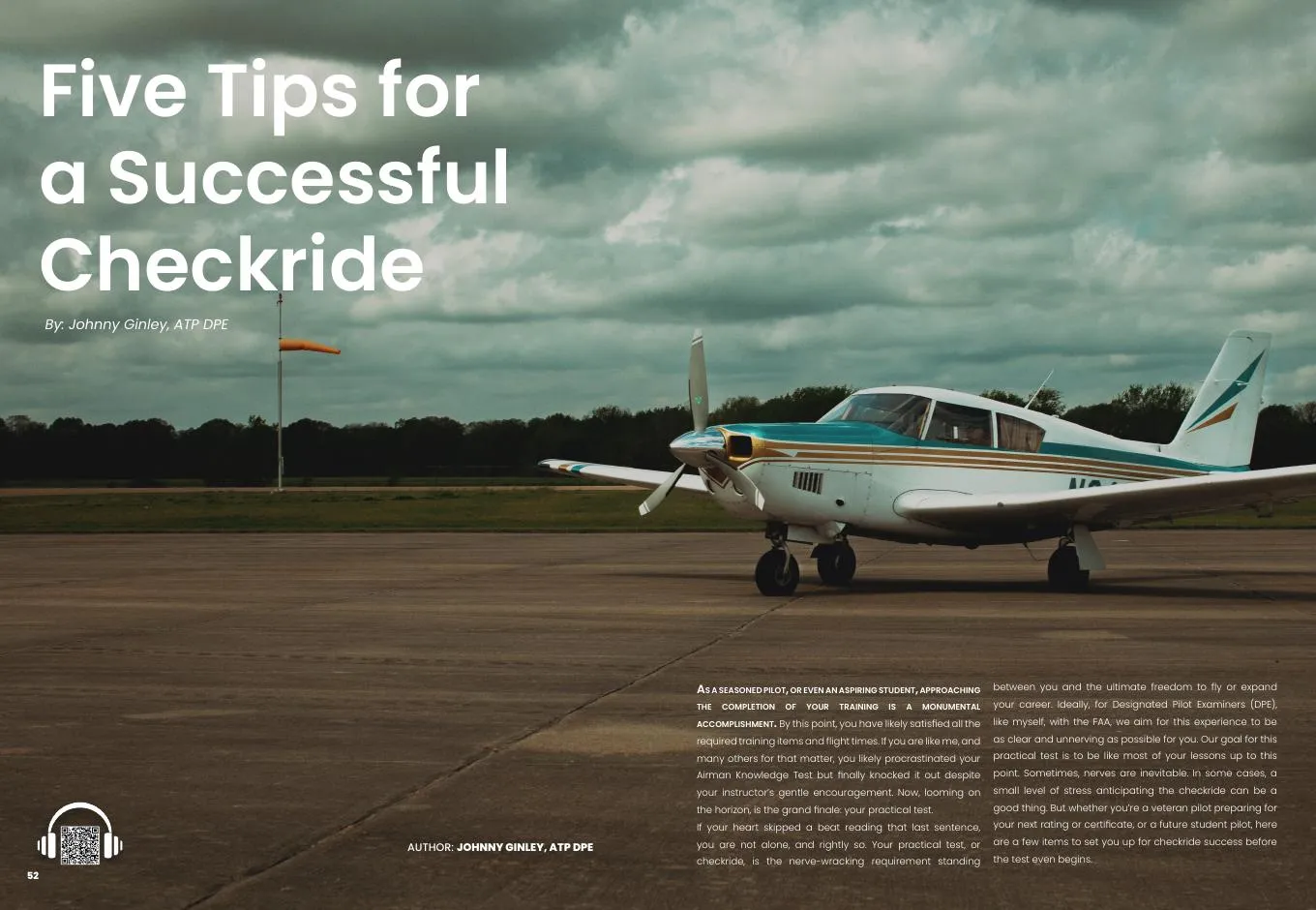
Our full checkride guide has examiner Johnny Ginley’s advice on paperwork, the oral exam and decision-making on the day.
Keep going: instrument, commercial and beyond
After the private license, most pilots add an instrument rating so they can fly in clouds. To be paid to fly you need a commercial pilot certificate, which requires 250 hours. Many pilots then become flight instructors (CFIs) and build time teaching.
Airline first officers need an Airline Transport Pilot (ATP) certificate: generally 1,500 hours and age 23. Military pilots and graduates of approved aviation degree programs can qualify sooner, with as few as 750 to 1,250 hours. The FAA doesn’t require a college degree, and several major airlines no longer require a four-year degree.
There’s real money at the end of that road. The US Bureau of Labor Statistics put the median pay for airline pilots at $232,140 in May 2025, and commercial pilots at $123,220, with about 16,400 openings a year expected through 2035.
Frequently asked questions
How long does it take to become a pilot?
A private pilot license usually takes three to six months flying several times a week, or a year or more part-time. Going from zero experience to an airline usually takes two to four years, depending on how fast you train and build hours.
How much does it cost to become a pilot?
A private pilot license typically costs $12,000 to $20,000 or more in 2026, depending on location, aircraft and how often you fly. Zero-to-commercial career programs often cost $90,000 to $125,000 or more.
Can I become a pilot with no experience?
Yes. Every pilot starts with no experience. Book a discovery flight at a local flight school to try it.
What are the requirements to become a pilot?
For a private pilot license in an airplane: be at least 17, read, speak and understand English, hold an FAA medical (or meet BasicMed or sport pilot rules where they apply), log at least 40 hours, and pass the FAA knowledge test and a checkride.
Do you need a college degree to be a pilot?
No. The FAA doesn’t require a degree for any pilot certificate, and several major US airlines have dropped their four-year degree requirement. A degree from an approved aviation program can lower the hours you need for an ATP.
What is the fastest way to become a pilot?
The sport pilot certificate has the lowest minimum, 20 hours. For a private license, flying several times a week at a well-run school is the biggest time saver.
How much do pilots make?
The US Bureau of Labor Statistics reports a May 2025 median of $232,140 a year for airline pilots and $123,220 for commercial pilots. Pay varies a lot by airline, aircraft and seniority.